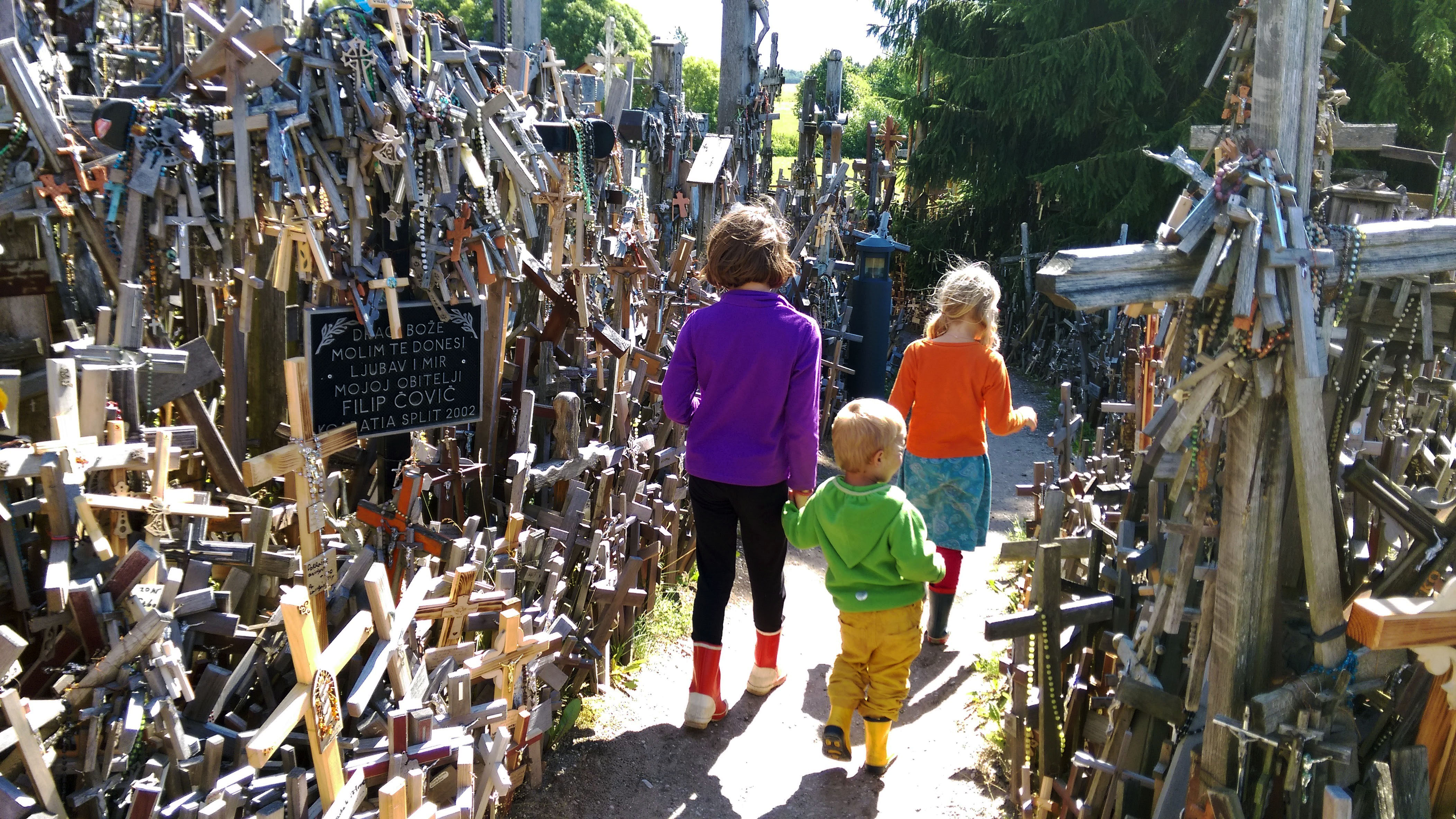
Kryžių kalnas (Hill of Crosses)
On a hill somewhere in Lithuania, thousands of crosses stand scattered across the landscape. Officially, the hill is now considered a Catholic pilgrimage site, and since a visit by the Pope even a holy one. But a look into the past reveals another image as well – a symbol of resistance against totalitarianism!
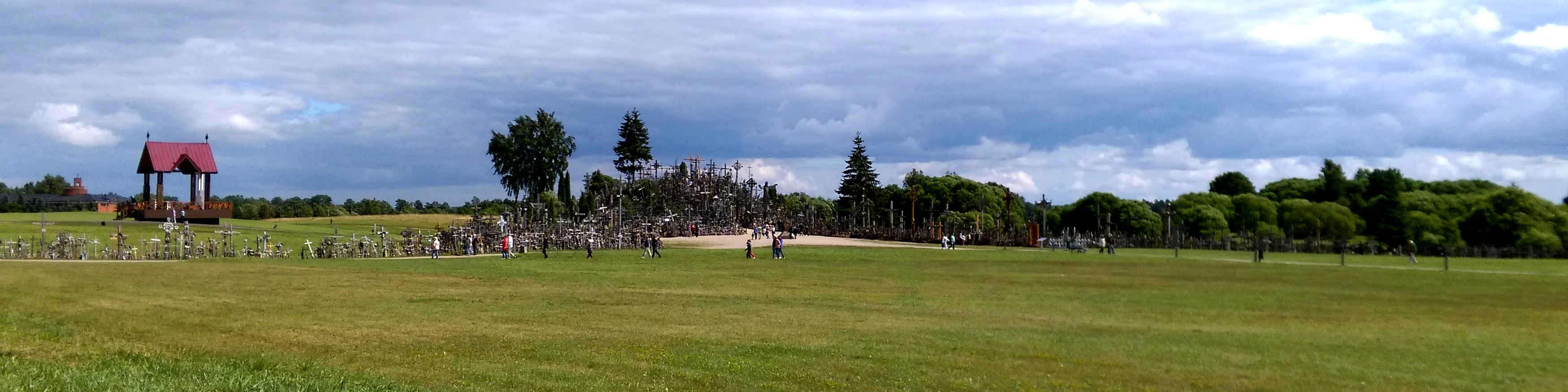
The Hill of Crosses is located in the middle of an unremarkable area, out in a field. From a distance, all you can see is an indistinct jumble – but the closer you get, the more overwhelming the sight becomes.
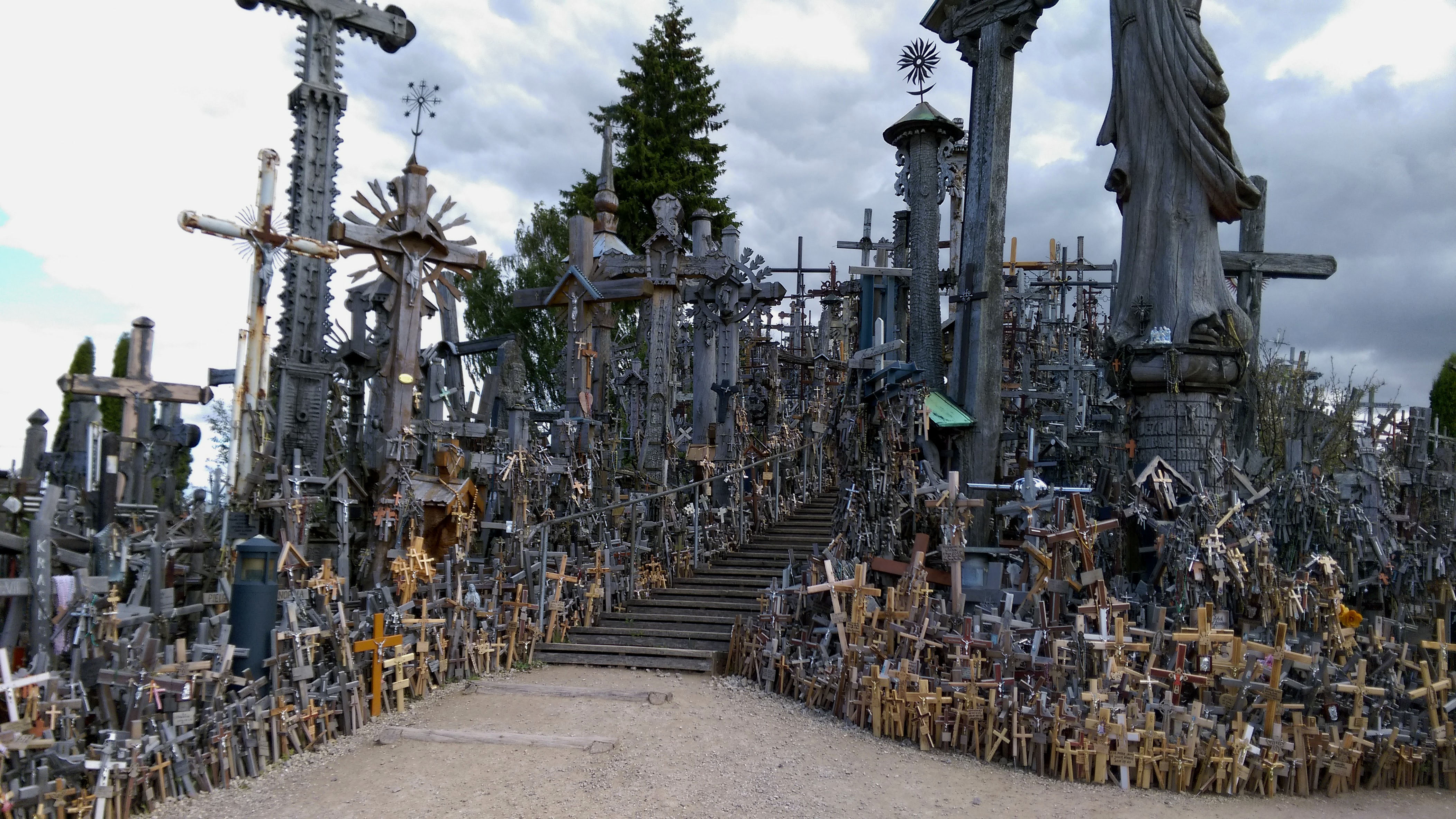
In the tightest of spaces, thousands upon thousands of Christian crosses jostle for room, ranging from just a few millimeters to several meters in height, made of wood, metal, stone or plastic, some elaborately decorated, others clearly improvised. Nearby stands a Catholic chapel, and there are souvenir shops. A pilgrimage site, judging by appearances...
Hill of Defiance
The true significance of the site only becomes apparent when taking a closer look at its history, particularly during the period of Soviet rule over Lithuania. Religion did not fit into the ideological worldview of the regime, not only because it was considered backward, but because it created loyalties that escaped state control.
When people from the surrounding area used the hill to commemorate the victims of the Stalinist regime, the authorities responded in a way that was as helpless as it was dogmatic: the crosses were completely removed and destroyed. The problem was that this solution worked astonishingly poorly. No sooner had the site been “cleared” than new crosses appeared, often at night, often in secret, and in even greater numbers than before.
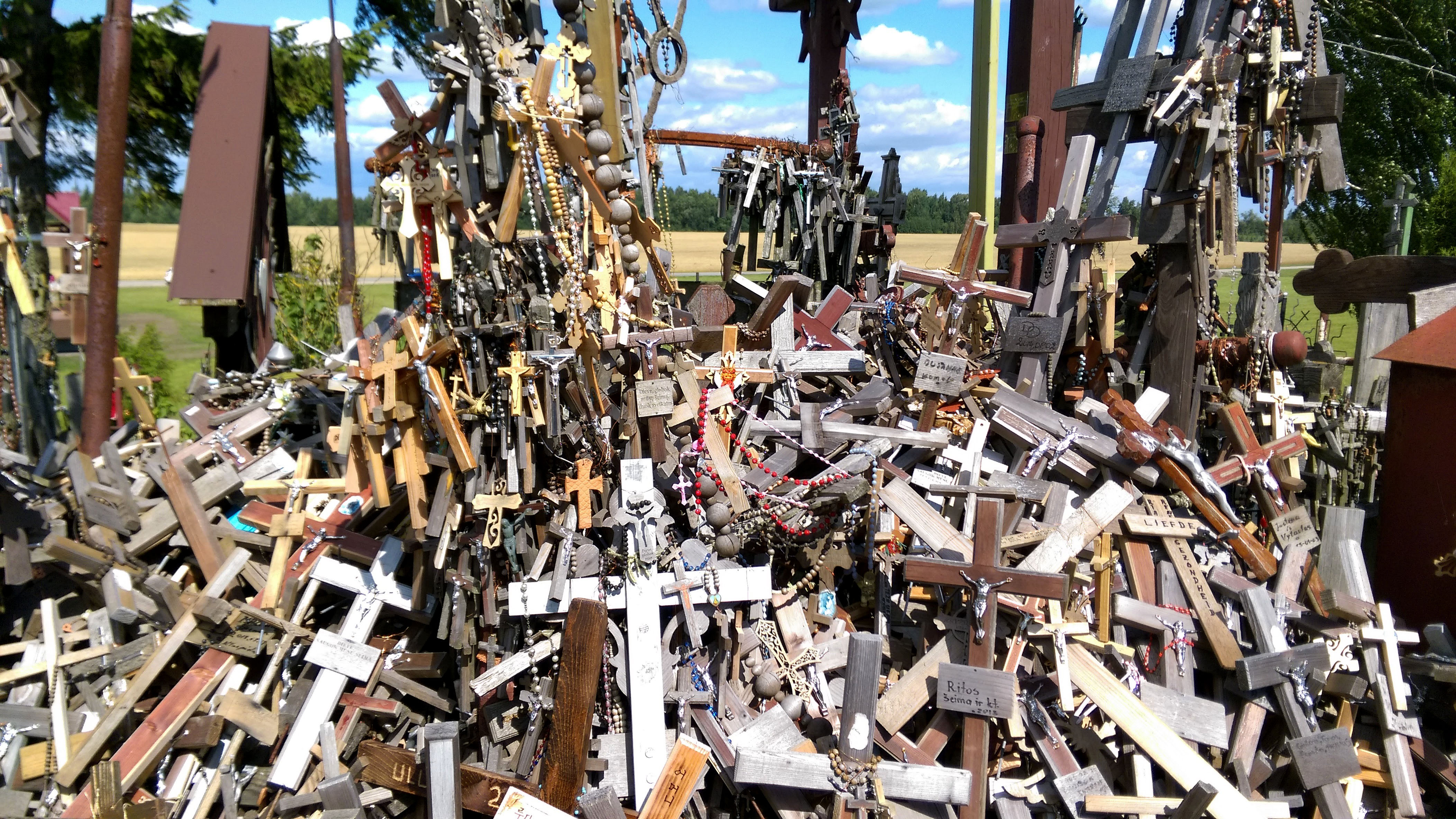
The embarrassing “crusade” of the Soviet occupying power against the memorial site repeated itself several times. Crosses were removed and re-erected in even greater numbers. In this way, the Hill of Crosses evolved from a mere religious pilgrimage site into a national symbol of defiant resistance against the totalitarian regime!
Dogma vs. Dogma
I personally find it amusingly ironic that Christian crosses of all things had to serve as symbols of resistance against dogmatism, while the Catholic Church itself has, at other times and in other places, dogmatically dominated world affairs. The fact that the cross was originally an instrument of torture and execution only makes the whole thing even more confusing...
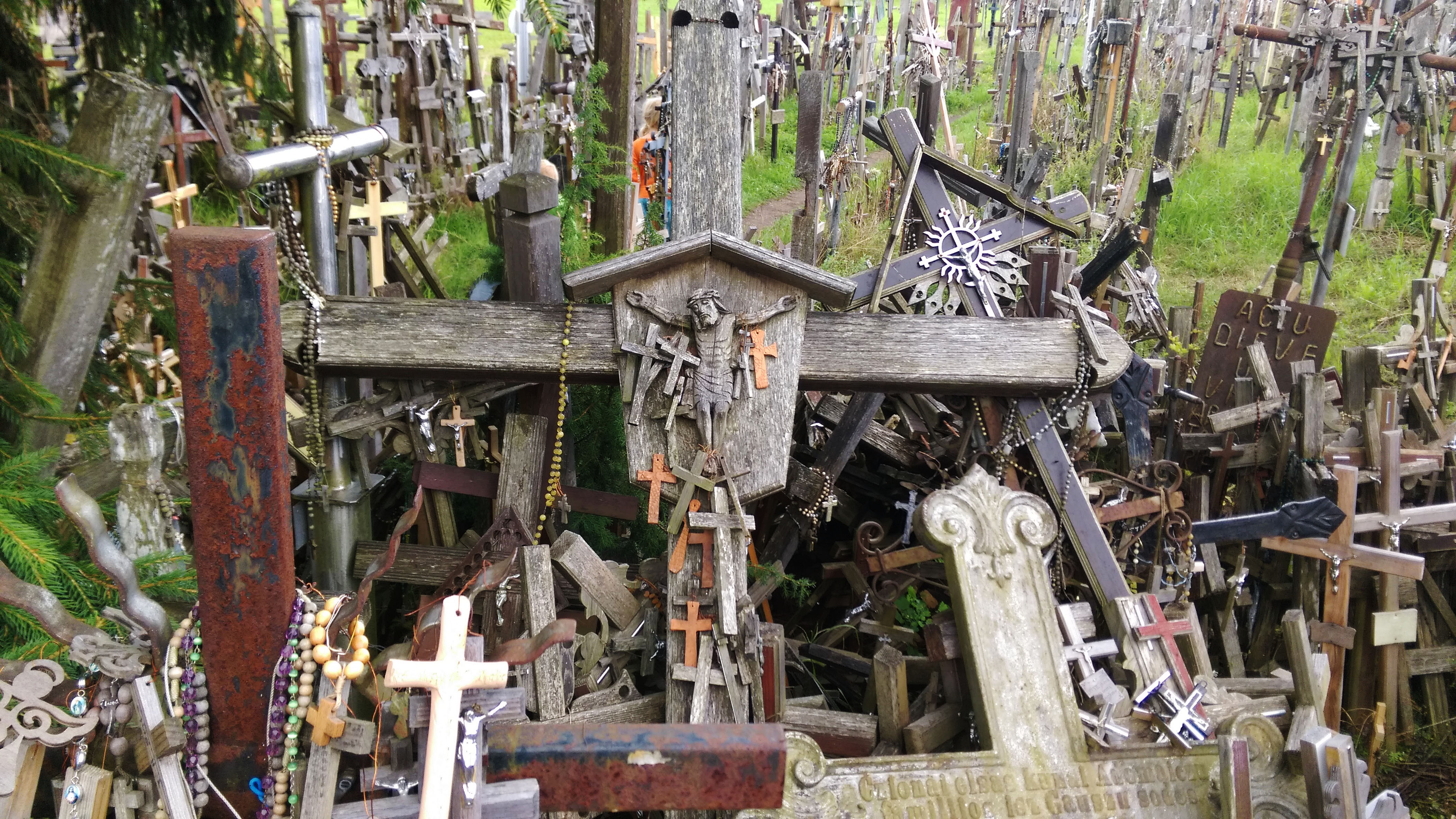
Despite all these contradictions, the Hill of Crosses is an impressive monument, created through the collaboration of thousands of people who have never met. The hill continues to grow.